Chinese dumplings can be a bit confusing if you are trying to figure out what to order from an English menu. You might see soup dumplings, pork buns, pan-fried dumplings, and potstickers listed beside each other, sometimes with photos that look pretty similar. They all involve dough wrapped around a filling, but that doesn’t tell you much about what is going to arrive at your table.
For this post, I want to look at xiao long bao, sheng jian bao, and jiaozi, including the pan-fried dumplings known as guo tie. The differences come down to the wrapper, the cooking method, and what happens inside when you take a bite. There is some overlap, especially between the two pan-fried options, but they aren’t interchangeable.
Richmond, BC gives you a chance to try all of these without travelling far between meals. Below, I’ll explain the background of each and mention a Richmond spot where you can try it: R&H Chinese Food, Longdhang Shanghai Cuisine, and Xi An Cuisine.
Xiao Long Bao: The Soup Is Inside
Xiao long bao are the dumplings you will often see abbreviated as XLB. They are round, gathered into pleats at the top, and steamed. Pork is a common filling, but the part that tends to get people’s attention is the soup inside the wrapper. These aren’t dumplings floating in a bowl of broth. The broth is enclosed with the meat.
The name refers to the small steaming baskets used to cook them. They are associated with Shanghai and the surrounding region, particularly Nanxiang, which is now part of Shanghai’s Jiading district. The Shanghai municipal government’s account of their history places the development of the Nanxiang style in the nineteenth century. That is a useful starting point, although it doesn’t mean that every soup-filled bun came from one shop or followed one recipe.
If you have ever wondered how someone gets liquid into a dumpling without it spilling out during assembly, the answer is that it doesn’t start out as liquid. A common method uses stock that sets into a jelly when cooled. This is called aspic, and it can be made by simmering pork skin and bones, which provide the collagen needed for it to set. Pieces of the jelly are mixed into the filling before the wrapper is closed. When the dumpling is steamed, the jelly melts back into broth. The Woks of Life explains the process if you want to see how it works in a recipe.
The wrapper needs to hold that liquid while still being something you want to eat. Thickness varies, so I wouldn’t use the thinnest possible skin as the only way to judge one. What matters is how the wrapper, meat, and broth work together.
For eating them, a spoon helps. Lift one onto the spoon, let it cool, and make a small opening in the wrapper before trying the broth. You can then eat the rest with some vinegar and ginger if they are provided. Biting straight into a freshly steamed one is a good way to find out how hot the filling is, which is probably not the lesson you came for.
Where to Try Them: R&H Chinese Food
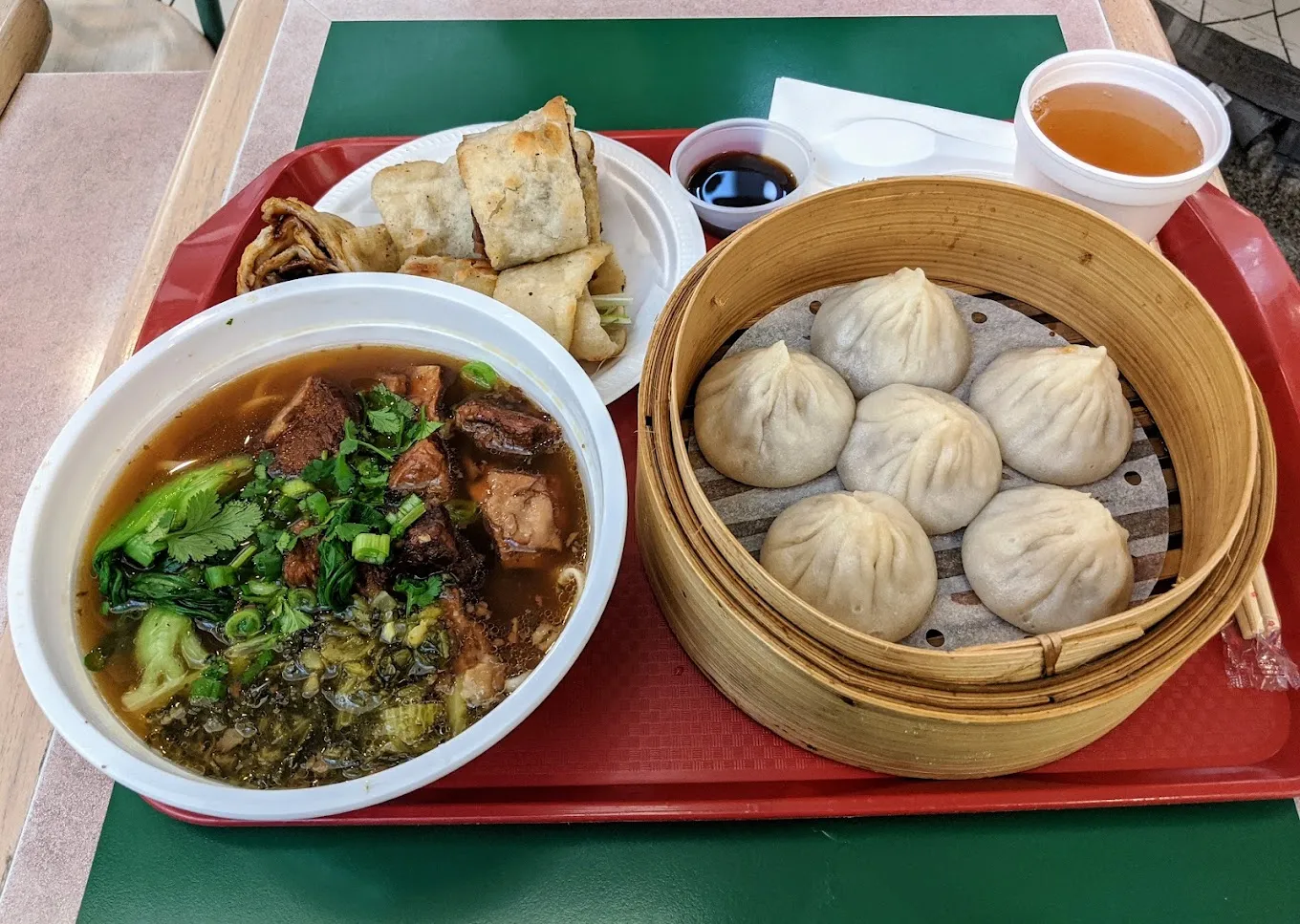
R&H Chinese Food is a stall in the Lansdowne Centre food court at 5300 No. 3 Road. Tourism Richmond lists xiao long bao among its dishes and notes that you can watch the dumplings being assembled.
That makes it a useful stop for this guide because you can connect the finished dumpling with the work that goes into closing it. A food court also makes it easy to order one dish rather than plan a whole restaurant meal. Start with the xiao long bao for this comparison, even though the stall also offers pan-fried options. Trying several dishes at one place can be worthwhile, but keeping track of which name belongs to which dumpling is the point here!
Sheng Jian Bao: A Bun with a Fried Base
Sheng jian bao are another Shanghai-associated food, also called sheng jian mantou. They are small filled buns that go into a pan rather than a steaming basket. You might see them translated as pan-fried pork buns, which helps distinguish them from the crescent-shaped potstickers I’ll get to below.
Their dough is generally thicker than the wrapper of a xiao long bao. Some versions use a partially risen dough, giving it a bit of chew without making it as fluffy as a larger steamed bao. There are variations in dough and filling, so don’t expect every restaurant’s version to have exactly the same texture.
The cooking combines frying and steaming. The buns cook in a pan with oil, while added water and a lid allow the filling and upper dough to cook through. As the water evaporates, the surface against the pan develops a browned crust. You end up with soft dough above and a fried base below. Sesame seeds and chopped scallions are common toppings.
The filling is usually pork, and some versions contain enough broth to need the same care as xiao long bao. This Shanghai-style recipe from The Woks of Life uses aspic and partially proofed dough. It is one example of why describing them as ordinary pork buns doesn’t quite explain what you are ordering.
For me, the useful distinction is that sheng jian bao give the dough and the fried surface more of a role in the meal. With xiao long bao, you are paying attention to a wrapper holding broth. Here, you also have a crust to bite through. That doesn’t make one better than the other, but it does make ordering both less repetitive than it might sound on a menu.
Where to Try Them: Longdhang Shanghai Cuisine
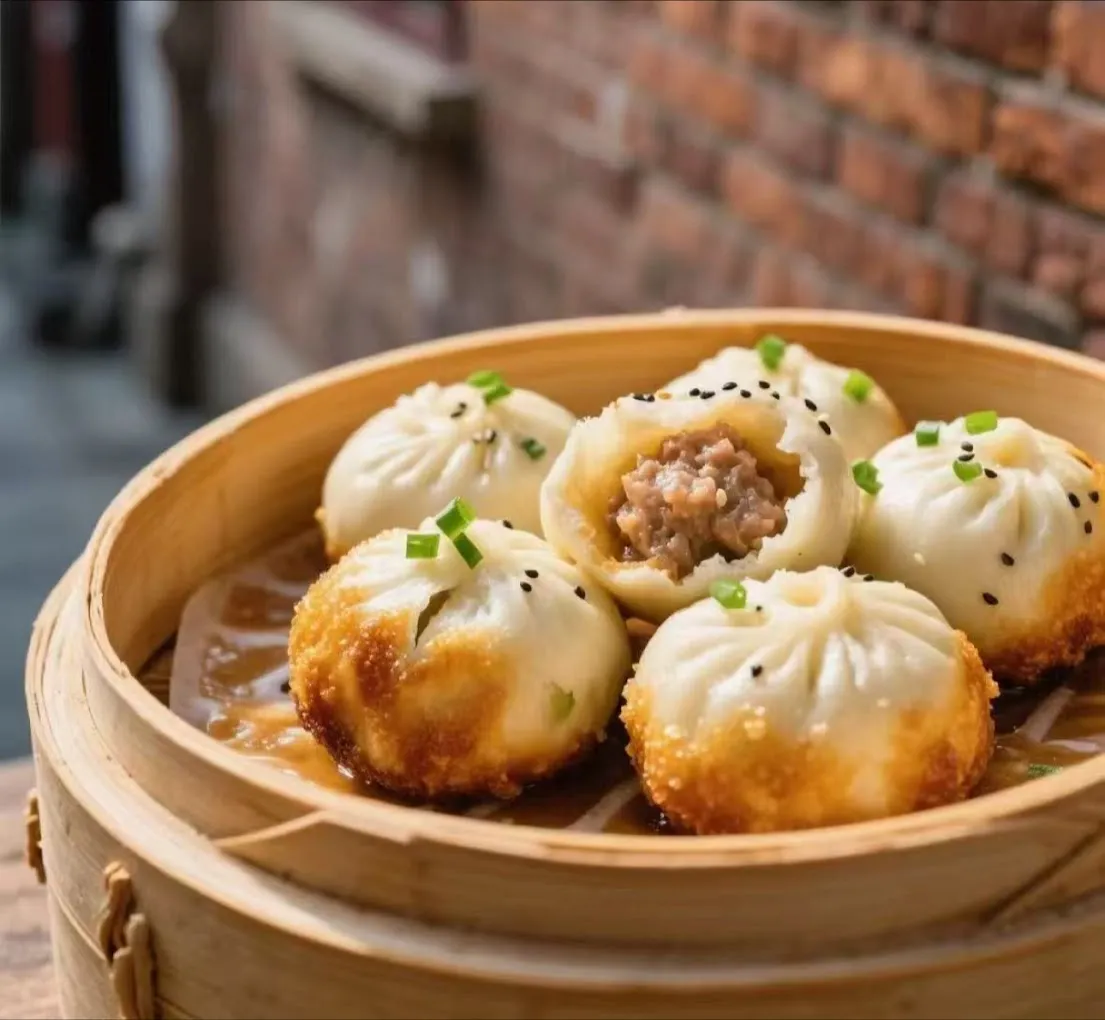
Longdhang Shanghai Cuisine, at 8053 Alexandra Road, is the sheng jian bao stop for this guide. Its Richmond delivery menu lists pan-fried pork buns under the Chinese name 招牌生煎馒头.
The menu wording is worth knowing because you may not see “sheng jian bao” written in English. Look for the pan-fried pork buns rather than assuming that every item called a dumpling is the same thing. This is also a sit-down stop, compared with the food court setting at R&H, so you can make the buns part of a meal rather than treating all three places as quick takeout counters.
Jiaozi and Guo Tie: Dumplings and Potstickers
Jiaozi are probably closer to what many people in Canada picture when they hear “Chinese dumplings.” They usually have a wheat-flour wrapper folded around meat, vegetables, or a mixture of both. The shape is often a crescent, with the edges pinched or pleated together, rather than the round, gathered shape of the two bao above.
They are particularly associated with northern China, where they are both an everyday meal and part of Lunar New Year celebrations. Making them can be a family activity, with several people working through a batch together. Their shape is also linked with old metal ingots and wishes for prosperity. The Woks of Life’s discussion of northern-style dumplings gives some context for that tradition without treating jiaozi as only a holiday food.
Pork with cabbage or chives is common, but jiaozi aren’t defined by one filling. Beef, lamb, seafood, and vegetable combinations also appear. If you want to understand the range, the dumpling filling guide from The Woks of Life is a useful place to start. The wrapper gives you a general category; the filling tells you more about the dish you are ordering.
Jiaozi can be boiled, steamed, or pan-fried. Boiled ones are often called shui jiao, while guo tie refers to potstickers. This is why “jiaozi vs guo tie” isn’t quite the same comparison as xiao long bao vs sheng jian bao. The first is a broader dumpling category, while the second describes a pan-fried style. Names and shapes vary, and some guo tie are long with open ends rather than sealed into crescents.
Like sheng jian bao, potstickers use a pan to create a browned underside while water and steam help cook the rest. The difference is the dough and shape. You are eating a dumpling wrapper around a filling rather than a thicker bun. A juicy filling is welcome, but a pocket of soup isn’t what defines guo tie.
Where to Try Them: Xi An Cuisine
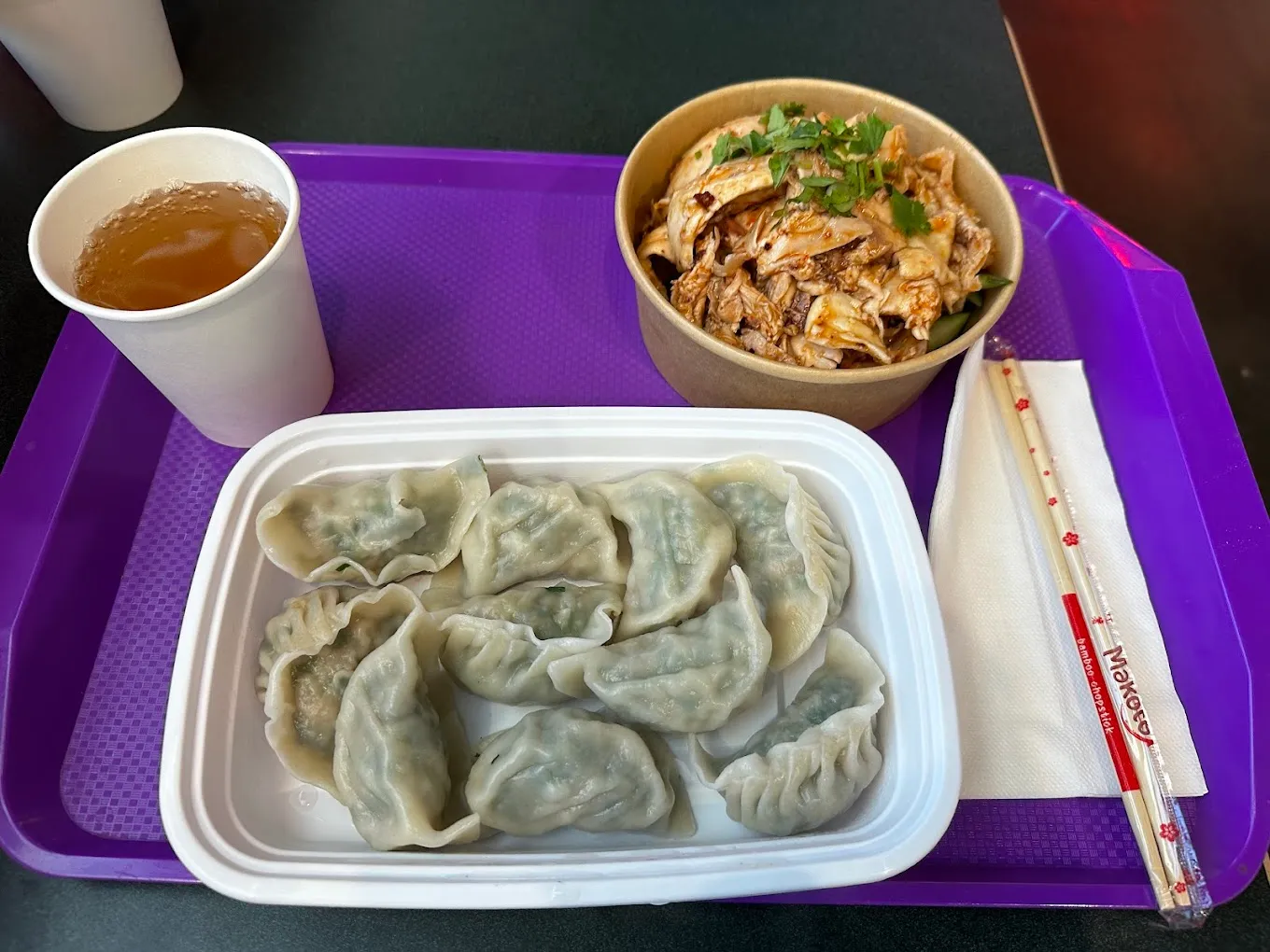
Xi An Cuisine is in the upstairs food court at Richmond Public Market, 8260 Westminster Highway. The stall takes its name from Xi’an, the capital of Shaanxi province, and also serves noodles and rou jia mo, a meat-filled bread often translated as a Chinese sandwich.
For the dumpling part of the menu, potstickers are the option to look for. MONTECRISTO’s account of Richmond’s Dumpling Trail includes an order of pork potstickers here, while Eater describes its open-ended fried dumplings. That open-ended shape is a reminder that a dumpling doesn’t need the familiar crescent outline to belong in this comparison.
What Should You Order?
If you want broth enclosed in a steamed wrapper, start with xiao long bao. If you want a filled bun with a fried base, look for sheng jian bao. For folded dumplings, jiaozi is the name to recognise, and guo tie is the potsticker option when you want that pan-fried surface.
You could split the three Richmond stops across separate visits or share orders with a friend. I would rather compare them while each is fresh than collect everything as takeout and let the wrappers and crusts change on the way home. Check current menus and hours before heading out, especially if you are visiting for one dish.
There are plenty of other dumplings beyond these, but learning a few names makes a menu easier to read. Once you know what separates them, you can start comparing fillings, wrappers, and cooking styles for yourself. And if you want to keep track of the places you try, create an Ukus account to log your visits, save your thoughts, and discover other restaurants to add to your list.